What does recruitment AI mean?
Artificial intelligence in recruitment is the use of software that can interpret text, recognize patterns, generate content, and make recommendations to support hiring tasks such as writing job ads, matching candidates, screening applications, and analyzing recruitment data. It is not one tool but a group of technologies, and works best as an assistant, not a decision maker.
Within recruiting, that covers several distinct capabilities:
- Generative AI, which creates text such as job ads, candidate emails, and summaries. Generative AI in recruitment is what powers faster vacancy drafts and quick first translations.
- Semantic matching, which compares the meaning of a resume and a vacancy rather than exact keywords.
- Candidate ranking and screening, which scores applications against defined criteria.
- Conversational AI and chatbots, which answer common questions.
- Predictive analytics, which spots patterns in historical data.
- Workflow automation, which triggers steps like publishing and follow-ups.
AI differs from ordinary automation. Automation follows fixed rules: if this, then that. AI interprets unstructured text, recognizes patterns it was not programmed for, generates content, and suggests actions. It interprets and recommends where automation repeats, so scoring or filtering people carries more risk than following rules.
Why AI matters for staffing agencies in 2026
Staffing runs on speed and volume. Agencies fill many roles at once on tight deadlines, and the one that reaches a good candidate first usually wins the placement. Yet much of a recruiter's day goes to admin: rewriting ads, chasing updates, and retyping notes. That is exactly the work AI can take off their plate.
Bullhorn's 2026 GRID report, based on responses from nearly 2,300 recruitment professionals, found that staffing firms are applying AI most heavily to candidate search and screening. Respondents also identified data quality, security, and the lack of a clear implementation strategy as major barriers. That reinforces an important point: buying an AI tool is not the same as implementing it successfully.
The value of AI for staffing agencies also comes from data. Every intake, application, and placement can produce first-party data collected through your own channels. That data can be valuable, but it must be processed for a clear purpose and in line with privacy rules and candidate rights. Using relevant records from an existing candidate database can reduce the need to source every candidate from scratch, provided the data is current and you have a lawful basis for contacting them. It is one reason agencies invest in building their own talent pool.
Visibility matters too. Candidates search for jobs across a growing mix of search engines, job platforms, and AI-assisted interfaces. To appear in these, your vacancies need their own indexable pages with clear titles and structured content such as JobPosting data. Google recommends making pages crawlable and giving them clear, descriptive titles so its systems can access and understand the content. These are important technical foundations, but they do not guarantee rankings. For more, see our guide on recruitment SEO and getting your vacancies found on Google and AI.
This is where these technologies connect to a wider shift. Relying only on Indeed or LinkedIn means you rent your visibility instead of owning it, which is why some agencies work to get more candidates without relying on Indeed. Agencies that publish and structure their own vacancy pages give these tools something to work with, and keep control of the traffic and data those pages produce.
15 practical uses of AI in recruitment
Here are fifteen uses agencies are already putting to work, from content and candidates through to data and operations.
1. Write job adverts faster
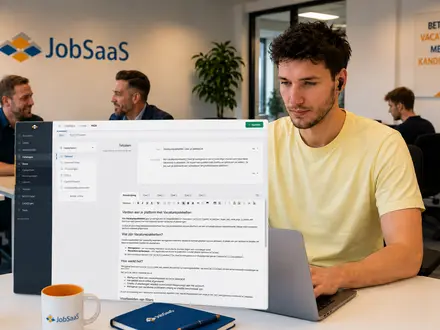
A recruiter feeds AI a short brief from the intake, and the tool returns a first draft of the job ad, with role, requirements, location, and shift pattern structured in seconds. The recruiter still owns it, checking pay, contract terms, realistic requirements, and inclusive language before publishing. KPI: time from intake to a published vacancy.
2. Improve existing job adverts
Paste an old vacancy and ask AI to sharpen a vague title, cut a long intro, remove jargon, drop needless requirements, and improve scannability. It can flag wording that may put applicants off, but it cannot prove an ad is bias-free. It suggests; a recruiter decides. KPI: application conversion rate on the improved pages.
3. Translate vacancies
For agencies placing international workers, AI can produce a first translation in minutes, in English, Polish, German, or Ukrainian. Human review stays essential: salary, contract type, certifications, local job titles, and legal terms need someone who knows the language and the local market. A rough translation of a safety certification is a real risk. KPI: time to publish per language, plus a sample accuracy check.
4. Match candidates to vacancies
Semantic matching reads the meaning of a resume and a vacancy rather than exact keywords. So a candidate whose resume says "forklift driver" can surface for a role titled "warehouse operative," because the tool sees similar experience, saving hours of searching in a large database. But AI also makes wrong connections, so a high match score is a prompt to review, never an automatic rejection. A recruiter confirms the shortlist. KPI: time to shortlist and how many suggestions get contacted.
5. Reactivate old candidates
A common scenario: your agency lands an order for twenty production workers, and your database holds thousands of old profiles where availability, titles, and skills were logged inconsistently. AI can surface the ones that plausibly fit, so you reuse data you already paid for. But old data is often wrong, so AI narrows the list and a recruiter verifies availability and consent before reaching out. KPI: reactivation rate and placements per contact.
6. Personalize candidate communication
AI can draft tailored messages at scale: outreach, status updates, interview confirmations, follow-ups, and reactivation campaigns. Each candidate gets a message that reflects the role and their stage, which cuts drop-off. But personalization must rest on accurate data and not fake a relationship, so a recruiter approves templates and tone. KPI: response rate and drop-off between application and interview.
7. Support screening and shortlisting
AI candidate screening ranks applications against defined criteria and can explain why each scored as it did, speeding up the first pass through a large pool. Separate four actions, because risk rises sharply across them: supporting a recruiter, ranking, recommending a shortlist, and automatically rejecting people are not the same. Automatic rejection carries far more legal and ethical weight than drafting a job ad. Keep a human reviewing every ranking, use documented criteria, and require explainable output. KPI: shortlist quality, not just time to shortlist.
8. Summarize intake and interview notes
AI can transcribe a recorded intake or interview and turn messy notes into a clean summary with requirements, budget, and start date for the client. Before recording an intake or interview, inform the participants, establish an appropriate lawful basis for processing, and check whether consent is required under the applicable national law. Store recordings securely and delete them when they are no longer needed. Summaries can contain errors, so a recruiter checks them before use. KPI: recruiter hours saved and the correction rate on summaries.
9. Answer candidate questions
A chatbot can safely handle repetitive questions: location, working hours, application status, which documents to bring, and how the process works. That answers candidates at midnight without tying up a recruiter. The rule is knowing when to hand over: anything sensitive, a complaint, or a negotiation goes to a person. KPI: questions resolved without a recruiter and satisfaction with the bot.
10. Support candidate sourcing
AI can support sourcing by drafting boolean strings, suggesting alternative job titles, pointing to adjacent occupations, proposing search regions, and writing outreach, which widens the net for a hard-to-fill role. One limit: on its own, AI has no access to a reliable, current pool of candidates unless it is connected to a real data source. The candidates still have to exist somewhere you can reach. KPI: qualified new candidates sourced per role.
11. Analyze search and vacancy data
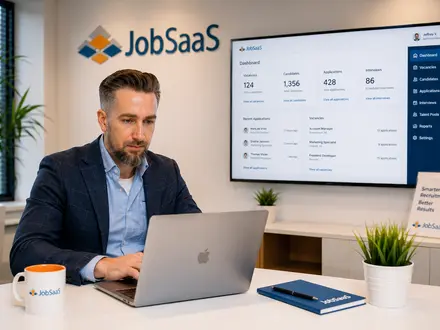
AI can read your vacancy data and spot patterns a person would miss, across page views, search queries, application starts and completions, drop-off, conversion, traffic source, device, and job category. From these you learn which roles attract traffic and where candidates abandon the form. But correlation is not causation: AI points to a pattern, and a person decides what it means. KPI: conversion rate and drop-off at each step.
12. Detect duplicates
Over time, databases fill with duplicate profiles and near-identical vacancies. AI can recognize and flag these, keeping your database clean and reporting honest. The risk is a false merge: two different people with the same name, or one person with two records, should not be combined automatically, so AI proposes and a person confirms. KPI: drop in duplicates and incorrect merges caught in review.
13. Automate recruitment marketing
AI can generate social posts, email campaigns, job alerts, reactivation messages, and campaign variations, then schedule them. This is where recruitment automation earns its keep, freeing your team from repetitive posting. It only works if the underlying vacancies are accurate and the audience segments correct, or you automate mistakes at scale, so a marketer still reviews messaging and targeting. KPI: reach, click-through, and applications per campaign.
14. Build SEO landing pages
AI can group vacancies into landing pages by role, location, industry, contract type, education level, and experience, for example warehouse jobs in Utrecht or machine operator roles in Eindhoven. Done well, this makes more vacancies findable; done badly, it backfires. Not every filter combination deserves an indexable page, and mass-generating thousands creates thin content, duplicate content, index bloat, and stale pages for filled jobs. Relevant, current pages beat volume, so a person decides what to publish. Choosing the right job board software can help by making it easy to publish and retire these pages in a controlled way. KPI: indexed pages that get real traffic, not the total generated.
15. Forecast staffing demand
By reading historical orders and seasonal patterns, AI can help you anticipate demand, so you start sourcing before a peak instead of during it. A logistics client that ramps up before the holidays is a clear example. But forecasts break on surprises: a new client, a lost contract, or a market shift will not appear in last year's data, so use them to prepare, not to commit blindly. KPI: forecast accuracy against actual orders.
Notice how many of these uses depend on one thing: your own vacancy pages and clean candidate data. This is one reason agencies build their own job board. A platform like JobSaaS gives staffing agencies a vacancy website they control, with structured vacancy data, multilingual publishing, and SEO landing pages: the structured vacancy content and first-party data that can improve content generation, analysis, matching, and recruitment marketing.
What AI needs before it can work
Poor recruitment data does not become reliable simply because an AI model processes it. A few things need to be in place first.
- Structured vacancy data and consistent job titles.
- Clean candidate records without heavy duplication or gaps.
- Up-to-date availability.
- Clear selection criteria, defined by a person in advance.
- ATS and CRM integrations, so data flows instead of being retyped.
- Privacy permissions and a lawful basis for processing personal data.
- Defined ownership for each AI use.
- Human review of any output that affects a candidate.
Get these right and even simple tools deliver value.
What we see when recruitment websites prepare for AI
Across more than 300 recruitment and job websites, the recurring obstacle is rarely the absence of an AI tool. It is usually inconsistent source data. The same role appears under several job titles, locations are entered differently, expired vacancies remain active, and candidate profiles contain incomplete or outdated availability.
AI can bridge some differences, but it cannot reliably repair an undefined recruitment process. Agencies get better results when they first standardize job titles, required skills, locations, contract types, and candidate statuses. That also improves search filters, SEO landing pages, ATS integrations, reporting, and the candidate experience, even before AI is introduced.
Benefits of AI in staffing
Used with care, AI can deliver concrete gains, though results depend on process, data, implementation, and oversight. Treat them as realistic possibilities, not guarantees.
- Less time lost to administrative tasks.
- Faster candidate communication.
- Faster vacancy publishing.
- More use of the candidate data you already own.
- More consistent vacancy quality and house style.
- Better insight into the candidate journey.
- Scaling without doing every task by hand.
Which recruitment tasks should not be fully automated?
The short answer is any decision that carries weight for a person. AI prepares and supports these moments, it does not own them. Keep these firmly in human hands:
- Final rejections. A rejection based solely on an automated score is legally and ethically risky.
- Final selection and hiring decisions. A person makes the call.
- Sensitive candidate conversations. Empathy and judgment do not automate well.
- Assessing special personal circumstances. Context beats a score.
- Conflicts and complaints. These need an accountable person.
- Decisions on incomplete or contradictory data. Pause, do not automate.
- Any case where a candidate asks for a human review. Honor it.
AI should shorten the distance between a recruiter and a good decision, not make the decision for them.
Bias, privacy, and the EU AI Act
Bias and privacy are where automated hiring gets serious. An algorithm trained on skewed data can quietly reproduce discrimination, for example by down-ranking older candidates or using a postal code as a proxy for background.
Not every use of AI in hiring is treated the same under the law. Under the EU AI Act, certain AI systems used for the recruitment or selection of people, including systems that filter applications, rank candidates, or evaluate them, may be classified as high-risk, depending on the intended purpose and how strongly the system influences decisions about candidates. The European Commission currently lists CV-sorting software used in recruitment as an example of an employment-related high-risk application.
From an operational and compliance perspective, drafting a vacancy text for human review will generally create less risk than automatically ranking or rejecting candidates. This is a practical risk view, not a formal legal classification, and even a generated vacancy text can contain biased or inaccurate content, so no use is entirely risk-free. The formal classification under the EU AI Act depends on the system's intended purpose and how it influences decisions. Tasks that most directly shape decisions about people include:
- Automatically ranking candidates.
- Filtering candidates out.
- Scoring or evaluating candidates.
- Automatically rejecting candidates.
- Treating a recommendation as the deciding selection factor.
The distinction is not the label "AI." It is whether the system meaningfully shapes a decision about a person. Whatever you deploy, the same practices apply: keep meaningful human oversight; process personal data under the GDPR with a lawful basis, data minimization, and transparency; make outputs explainable; keep logs; check input quality; secure the system; and be clear about which responsibilities are the vendor's and which are yours. Article 22 of the GDPR gives individuals the right, subject to specified exceptions, not to be subject to a decision based solely on automated processing when that decision produces legal effects or similarly significantly affects them. Whether a particular ranking or recommendation falls under this depends on how genuinely a person is involved and how significantly the decision affects the candidate.
So can you use these tools here? AI can be used legally in recruiting, but the applicable obligations depend on the system, its intended purpose, and how strongly it influences decisions about candidates. Under the current EU implementation timeline, the high-risk requirements for AI systems used in areas including employment are scheduled to apply from 2 December 2027. Other obligations under the AI Act may already apply, and the classification of a particular recruitment tool still depends on its intended purpose and use. This article reflects the position as of July 2026, so check the current European guidance before you deploy a high-risk recruitment application. For any use that ranks, filters, scores, or rejects candidates, get legal or compliance advice for your situation first.
How to measure the return on AI
Measure the return on AI in recruitment against numbers you already track, not against the hype. Take a baseline, then compare one use case at a time.
| Use case |
Baseline metric |
Success metric |
Risk to monitor |
| Writing vacancies |
Hours per vacancy |
Time from intake to approved ad |
Inaccurate or inflated requirements |
| Publishing vacancies |
Time to publish |
Time to live across channels |
Errors published without review |
| Candidate communication |
Response rate |
Higher response, lower drop-off |
Messages that feel fake |
| Reactivating candidates |
Reactivation rate |
Placements from the database |
Contact without valid consent |
| Application flow |
Conversion rate |
More completed applications |
Volume over quality |
| Screening and shortlisting |
Time to shortlist |
Faster, higher-quality shortlist |
Biased or unexplainable rankings |
| Filling roles |
Time to fill |
Shorter time to fill |
Speed at the cost of fit |
| Recruiter experience |
Recruiter satisfaction |
Higher satisfaction, less admin |
A tool that is ignored |
| Candidate experience |
Number of complaints |
Fewer complaints |
Complaints about automation |
| AI output quality |
Error rate |
Low rate of incorrect recommendations |
Wrong recommendations acted on |
Speed cannot be your only measure. Quality, candidate experience, and error rates matter just as much. A tool that fills roles faster but raises complaints is not a win.
A practical implementation plan
You do not need a data team to start, only one clear problem and a way to measure progress.
- Select one clearly defined problem, such as writing and translating vacancies.
- Record the baseline, so you can prove whether anything improved.
- Classify the risk of the use case. Drafting an ad is low risk; ranking candidates is not.
- Check your data and privacy requirements before you switch anything on.
- Choose a limited pilot group of recruiters, for two to four weeks.
- Keep humans reviewing every output during the pilot.
- Measure both the benefits and the errors, honestly.
- Document the process, including data in and accountability, before wider rollout.
Start with lower-risk content work, writing and translating vacancies, before you automate selection or ranking, proving the value and the controls on the easy use case first.
How to evaluate an AI recruitment vendor
Before you sign with a vendor, ask hard questions. This checklist compares suppliers on what matters, not on the demo.
| Question to ask |
What to look for |
| What data does the system process? |
Only what is needed for the task. |
| Where is the data stored? |
A region and setup that fit your GDPR obligations. |
| Is customer data used to train the model? |
A clear no, or explicit opt-in control. |
| Can the system rank or reject candidates? |
You understand this before you enable it. |
| Can a recruiter see why a recommendation was made? |
Explainable output, not a black box. |
| Can a decision be corrected? |
A human can override any output. |
| What logging is available? |
An audit trail of what the system did. |
| What documentation does the vendor provide? |
Clear docs, especially for higher-risk use. |
| What security measures are in place? |
Encryption, access control, and testing. |
| How are errors and complaints handled? |
A defined process and point of contact. |
| Can data be deleted or exported? |
Full control over your own data. |
| Which integrations exist with ATS, CRM, and job board? |
Real connections, not manual exports. |
Common mistakes when implementing AI
Most failed rollouts share the same mistakes, each with a simple fix.
- Automating too many processes at once. Start with one use case.
- Buying a tool without a concrete problem. Define the problem first.
- Ignoring poor candidate data. Clean records first.
- Skipping a baseline. Without one you cannot prove any gain.
- Undertraining recruiters. Teach the team where the tool fails.
- Treating AI output as truth. Every output is a suggestion to check.
- Assigning no owner. Name someone accountable for each AI use.
- Not informing candidates where needed. Be transparent about automation.
- Publishing AI content unchecked. A person reviews before it goes live.
- Looking only at time saved. Weigh quality, experience, and errors too.
- Not logging errors or complaints. Track them.
- No exit plan for a vendor. Make sure you can export data and leave.
Frequently asked questions
Will AI replace recruiters?
No, but it changes the job. AI takes over repetitive tasks like writing ads, matching, and admin, freeing recruiters for what wins business: relationships, context, negotiation, and judgment. Treat it as support, not a replacement.
Is it legal to use AI for recruiting under the EU AI Act?
It can be, but the obligations depend on the system and how strongly it influences decisions about candidates. Drafting a vacancy is treated very differently from systems that filter, rank, or reject applicants. For anything that scores or selects candidates, get legal advice for your specific situation.
What is the safest AI use case to start with?
Content work with a human check. Drafting vacancy texts, summarizing intake notes, and reviewing translations are low risk, easy to verify, and save time right away, so prove the value there before moving to matching or screening.
Can small staffing agencies use AI?
Yes. A small agency does not need an expensive custom system; much of the value comes from generative AI and features already built into modern recruitment and job board software. What you need is clean data, a clear process, and human control.
Can AI reject job candidates automatically?
This is high risk and best avoided. Automatic rejection carries serious legal, ethical, and operational consequences, and data protection rules protect people against decisions made solely by automation. In practice, a human should review any rejection.
Does AI need access to an ATS or CRM?
For text tasks like writing or translating, no. But matching, reactivation, and analysis usually need structured data and integrations with your ATS, CRM, or job board to work well.
How can staffing agencies prevent bias?
Start with clear, documented selection criteria and clean, representative data, then test before rollout, monitor output, keep humans reviewing decisions, and run periodic audits. Bias prevention is ongoing work, not a one-time setup.
Conclusion: where to go from here
AI in recruitment is not one big project. It is a series of small, controlled wins: faster ads, cleaner data, better matches, and vacancies that show up in Google and AI search. Start with one low-risk use case, keep a person in control of every decision that affects a candidate, respect privacy and the AI Act, and measure the gains and the errors. That is how staffing agencies get real value in 2026.
Much of that value depends on owning your foundation: your own vacancy pages, structured vacancy data, and first-party candidate data, published in multiple languages and organized into SEO landing pages you control. For agencies that want it, JobSaaS provides that foundation, a recruitment agency website and job board with structured vacancy data, multilingual publishing, SEO landing pages, integrations with recruitment software, and control over the candidate journey. The AI tools you add sit on top of that foundation, so they have structured content and first-party data to work with, and more of your traffic and candidates stay yours.
Sources
This article draws on publicly available primary sources rather than proprietary statistics. Links were correct at the time of writing; check that each resolves to the current version before relying on it.
- European Union. Regulation (EU) 2024/1689 (EU AI Act). Official Journal, 12 July 2024. eur-lex.europa.eu/eli/reg/2024/1689/oj
- European Commission. Regulatory framework on artificial intelligence. Accessed July 2026. digital-strategy.ec.europa.eu
- European Union. Regulation (EU) 2016/679 (GDPR), Article 22, automated individual decision-making. Official Journal, 4 May 2016. eur-lex.europa.eu/eli/reg/2016/679/oj
- Google Search Central. Job posting (JobPosting) structured data. Accessed July 2026. developers.google.com
- Google Search Central. Control your title links in search results. Accessed July 2026. developers.google.com
- Google Search Central. SEO Starter Guide, crawling and indexing basics. Accessed July 2026. developers.google.com
- Bullhorn. GRID 2026 Industry Trends Report, based on responses from nearly 2,300 recruitment professionals. 2026.