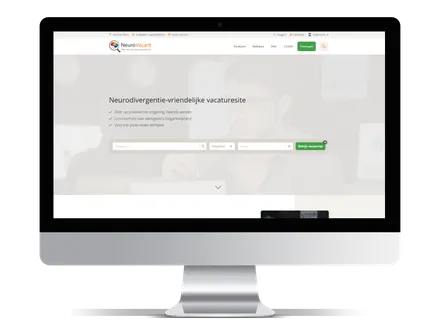
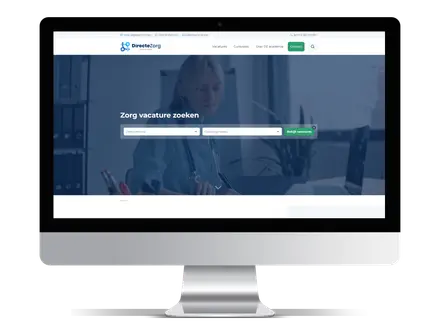
If you look up the word job site, you will find two very different meanings. Merriam-Webster defines a job site as the physical place where work is carried out, such as a construction site. This article is about the other meaning, the one most people search for online: the digital job site where vacancies are published and candidates apply.
A job site is an online platform where employers, recruiters or staffing agencies publish job vacancies and where job seekers search, compare and apply for jobs. Job sites are also called job boards, job portals, job websites or employment websites, and the terms are often used interchangeably.
That is the short answer. But a modern job site is far more than a list of openings. It is a searchable, structured and increasingly AI-powered recruitment platform that connects job seekers with employers, supports applications end to end, improves vacancy visibility in Google, and helps recruiters measure and optimise their hiring results. This guide explains exactly what a job site is, how it works, what features it needs, the different types that exist, and how job sites make money.
What Is a Job Site?
At its core, a job site is a marketplace for work. On one side are organisations that need to fill roles: companies, recruitment agencies, temp agencies and staffing firms. On the other side are people looking for a job. The platform sits in the middle: it stores vacancies in a structured database, makes them findable through search and filters, and gives candidates a way to apply.
Major platforms such as Indeed, JOIN and many others describe the concept the same way: employers post vacancies, job seekers search and apply, and labels like job board, job portal, job website and employment website all point to the same basic idea. What distinguishes a strong job site from a weak one is not the definition. It is the quality of the search experience, the structure of the data behind it, and how well the platform performs in search engines and AI assistants.
Job Site vs Job Board vs Job Search Engine vs Career Site vs ATS
Because so many similar terms float around, it helps to be precise. These are related but genuinely different things, and confusing them is one of the most common mistakes in recruitment content.
| Term |
What it is |
| Job site / job board |
A website where vacancies are published and where candidates can search and apply directly. |
| Job search engine / aggregator |
A platform that collects vacancies from other websites, career pages and job boards, rather than hosting them itself. |
| Career site |
The vacancy section of a single employer's own website. |
| ATS (Applicant Tracking System) |
Software used internally to manage and track applications through the hiring pipeline. |
| Recruitment agency website |
The website of a staffing or recruitment agency, showing its own vacancies and services. |
The key distinction: a job site hosts vacancies and handles applications, a search engine aggregates vacancies from elsewhere, a career site belongs to one employer, and an ATS manages applications behind the scenes. A recruitment agency website is essentially a specialised job site combined with a service offering. Many real-world platforms blend several of these roles, which is exactly why the terminology gets muddy.
How a Job Site Works
The easiest way to understand a job site is to look at it from the three perspectives that meet on the platform: job seekers, employers and recruiters, and the platform owner. Each one experiences a different part of the same system.
For job seekers
Candidates arrive looking for work. They search by job title, keyword, location, industry, education level, salary, experience level, contract type and increasingly by remote or hybrid options. They open a vacancy to read the full description, upload a CV or apply with an existing profile, and set up job alerts so they are notified when matching roles appear. A good job site makes this whole journey fast, mobile-friendly and frictionless.
For employers and recruiters
Employers and recruiters use the platform to fill roles. They create a vacancy, add the job description, set the location, salary and type of employment, publish it, and then receive and review candidates. The better platforms let them measure results such as views, clicks, applications and conversions, so they can see which vacancies perform and adjust accordingly.
For the platform owner
Behind the scenes sits the person or business that runs the job site. Their job is to manage vacancies, approve employers, configure pricing and revenue models, generate SEO-friendly landing pages, safeguard data quality, and handle payments and reporting. This perspective is the one most "what is a job site" articles forget entirely, yet it is where modern job board software adds the most value, giving staffing agencies, recruitment agencies and job board owners the tools to run a professional vacancy website without building everything from scratch.
The Most Important Features of a Job Site
A job site lives or dies by its features. These are the building blocks that separate a serious recruitment platform from a basic page of links. In practice, most job sites fail not because they lack vacancies, but because their vacancy data is not structured well enough for search engines, filters and AI matching. That is why the first item on this list matters more than any other.
- Structured vacancy database. Every vacancy should be stored in a structured way, with title, location, employer, type of employment, salary, category, publication date and expiry date. Clean data is the foundation everything else depends on.
- Search and filters. Candidates should be able to search by job title, keyword, location, industry, education, salary, experience, contract type, remote or hybrid status and hours per week. Fidelity, for example, highlights location, skills, experience level, working pattern and salary as the dimensions candidates filter on most.
- SEO-friendly vacancy detail pages. Each vacancy needs its own page with the full description, requirements, employment terms, location, employer, an apply button and structured data.
- A smooth application process. Candidates should be able to apply easily, whether through a form, CV upload, LinkedIn profile, email or a link to an external ATS. Indeed notes that candidates can either apply directly on the job board or be redirected to the employer's own website.
- Employer profiles. A strong job site shows more than vacancies: company logo, description, culture, benefits, photos, reviews, contact details and all roles from that employer in one place.
- Candidate accounts. Profiles, CVs, saved vacancies, application history, notifications and privacy settings give candidates a reason to return.
- Job alerts. Saved-search notifications are one of the most common and valuable job-site features (the National Careers Service and SmartJobBoard both list them as standard functionality), because they bring candidates back the moment a relevant role appears.
- Mobile-friendly design. A large share of job searches now happen on a phone. Mobile compatibility, as Jobspikr points out, is no longer optional for a job board.
- Data feeds and integrations. ATS connections, XML feeds, APIs, import/export, multiposting, and integrations with Google Jobs, Indeed, LinkedIn, Zapier or n8n and recruitment software keep vacancies flowing in and out automatically.
- Analytics and reporting. Employers want to know how many views, clicks, applications and conversions a vacancy generated. Jobspikr lists analytics and reporting as an essential part of job board software.
Job Site Feature Checklist
If you are evaluating or building a job site, this is the short version: the features that do the heavy lifting, and why each one earns its place.
| Feature |
Why it matters |
| Vacancy database |
Makes jobs searchable and reusable |
| Search filters |
Helps candidates find relevant jobs faster |
| Job alerts |
Brings candidates back automatically |
| Employer profiles |
Improves trust and employer branding |
| JobPosting schema |
Helps Google understand job pages |
| SEO landing pages |
Attracts organic traffic |
| Analytics |
Shows employers what works |
Types of Job Sites
Not all job sites serve the same audience. Jobboard Finder distinguishes between several categories, including generalist, specialist, news/classifieds and employment-office-style boards, and in practice you will encounter these main types:
- General job sites cover every industry and region, such as Indeed or Monster.
- Niche job sites focus on a specific industry, profession or skill set, which usually means higher-quality, more relevant matches.
- Local job sites concentrate on a city, region or country.
- Company career sites show the vacancies of a single employer.
- Aggregators pull vacancies together from many other sources rather than hosting them.
- Recruitment agency job sites publish an agency's own roles alongside its services.
Niche and local job sites are often the most defensible. A broad board competes with giants on volume; a focused board competes on relevance, trust and community, and tends to rank better for specific, high-intent searches.
Why SEO Matters for Job Sites
For most job sites, organic search is the single most important source of traffic. Candidates type queries like "marketing jobs in Amsterdam" or "part-time healthcare jobs" straight into Google, and the platforms that rank for those queries win the candidates. That means SEO is not a marketing afterthought for a job site. It is core to the business model.
The biggest SEO opportunity is the indexable landing page. Beyond individual vacancies, a modern job site should generate structured overview pages such as:
- Marketing jobs in Amsterdam
- Remote software developer jobs
- Part-time healthcare jobs
- Administrative jobs in New York
- Entry-level finance jobs
Each of these pages targets a real search query, stays fresh as new vacancies are added, and captures candidates at the exact moment they are looking. A platform that generates these pages automatically turns the vacancy database itself into an ongoing source of organic traffic.
JobPosting Structured Data and Google for Jobs
Structured data is how a job site speaks Google's language. Google explains that vacancy pages using JobPosting structured data can become eligible for an enhanced job-listing experience directly in Google Search: the "Google for Jobs" boxes that appear above normal results. For a job site, that visibility can be transformative.
One detail matters and is often missed: JobPosting structured data belongs on individual vacancy pages, not on overview or category pages. Each job gets its own marked-up page; the landing pages above earn their traffic through normal SEO. Getting this right is one of the clearest signals that a platform was built by people who understand recruitment search.
AI, Matching and the Future of Job Sites
The biggest shift in job sites right now is the move from keyword matching to semantic, AI-powered search. LinkedIn, for example, now lets users describe what they are looking for in natural language; the system interprets the intent behind the request rather than matching exact keywords. A candidate can write "remote marketing role at a small company with flexible hours" and get relevant results, even if none of those exact words appear in the vacancy.
For platform owners, AI matching raises both the candidate and employer experience: better matches mean more applications, fewer irrelevant results and higher satisfaction on both sides. It also changes how content is discovered. As more people ask AI assistants questions like "where can I find part-time logistics jobs near me", job sites that publish clear, structured, well-defined content are the ones those assistants will surface.
Privacy, Trust and Candidate Data
Job sites handle sensitive personal data: CVs, contact details, work history and sometimes salary information. That carries real responsibility. Privacy researchers at Incogni have found that many job seekers underestimate the privacy risks involved and often do not know which platforms store or share their data. A trustworthy job site is transparent about what it collects, stores data securely, and gives candidates control over their information.
Trust also means keeping fraudulent and fake vacancies off the platform. A reputable job site protects its users by:
- verifying employers before they can post;
- letting users report suspicious vacancies;
- requiring clear company details;
- never asking candidates to pay to apply;
- moderating listings; and
- providing secure communication channels.
These safeguards are not just ethical. They are commercial. A job site that earns a reputation for safety attracts more candidates, which in turn attracts more employers.
How Job Sites Make Money
Job sites use a range of revenue models, and most successful platforms combine several:
- Pay per vacancy: employers pay for each posting.
- Employer subscriptions: recurring access to posting and tools.
- Featured jobs: paid placement and visibility upgrades.
- CV database access: recruiters pay to search candidate profiles.
- Employer branding packages: enhanced company profiles and content.
- Advertising and sponsoring: display and sponsored placements.
- Lead fees: payment per qualified candidate or application.
- Recruitment services: done-for-you hiring on top of the platform.
The right mix depends on the audience. A niche board with engaged employers might lean on subscriptions and featured jobs, while a high-traffic generalist board can monetise through advertising and CV access.
What Makes a Job Site Successful?
Pulling it together, the strongest job sites share a recognisable pattern. They hold a clean, structured vacancy database; offer fast, well-filtered search on every device; give each vacancy an SEO-friendly page with JobPosting structured data; generate indexable landing pages that capture high-intent search traffic; make applying effortless; protect candidate data and block fraud; and give employers clear analytics. Increasingly, they layer AI-powered matching on top. A job site that does all of this is not just a list of vacancies. It is a recruitment engine.
Benefits and Limitations of Job Sites
A job site is a powerful channel, but it is not a magic switch. Being honest about both sides is what separates a realistic recruitment strategy from wishful thinking.
Benefits
- More visibility for vacancies, especially through organic search.
- An easier, faster application process for candidates.
- Better, more structured candidate and vacancy data.
- Lower dependency on paid advertising over time.
- Stronger employer branding through profiles and content.
- Measurable recruitment performance you can actually optimise.
Limitations
- Without traffic, a job site does not automatically deliver candidates, so it needs SEO, content and promotion.
- Poor or messy vacancy data hurts search rankings, filters and matching.
- Fake, outdated or "ghost" jobs quickly damage trust.
- Broad, general job sites compete directly with very large platforms.
- Niche job sites only work with a clearly defined audience.
- A job site is one part of recruitment, not the entire strategy.
Can You Build Your Own Job Site?
Yes, and you no longer need a development team to do it. Building a job site from scratch means recreating a structured database, search and filtering, vacancy pages with structured data, application flows, employer accounts, analytics and SEO landing pages, which is a serious engineering project. This is why many staffing agencies, recruitment agencies and job board owners now use dedicated job site platforms (JobSaaS is one example) to launch a professional, SEO-ready vacancy website without building everything themselves. For staffing agencies in particular, the biggest advantage of owning a job site is not only publishing vacancies, but building long-term organic visibility and candidate ownership that does not disappear the moment an ad budget runs out. If you are weighing "build versus buy", the feature list above is a good place to start: it shows which parts you would otherwise need to build and maintain on your own.
Examples of Job Sites by Type
There is no single model of a job site, only the shared purpose of connecting the right candidate with the right role. The clearest way to see the landscape is to break it down by type, what each looks like in the wild, and who it suits best.
| Type |
Examples |
Best for |
| General job site |
Indeed, Monster, LinkedIn Jobs |
Broad reach |
| Niche job site |
Healthcare, tech, logistics or education boards |
Relevant candidates |
| Local job site |
City or regional vacancy platforms |
Local hiring |
| Recruitment agency job site |
Staffing agency vacancy websites |
Own jobs and candidate ownership |
| Remote job site |
Remote-only platforms |
Distributed teams |
| Company career site |
Employer-owned career pages |
Employer branding |
Most successful operators do not try to be everything at once. They pick a type that matches their audience and strengths, and the more focused that choice, the easier it is to rank, build trust and grow.
Frequently Asked Questions
What is a job site?
A job site is an online platform where employers, recruiters or staffing agencies publish vacancies and where job seekers search, compare and apply for jobs. It is also called a job board, job portal, job website or employment website.
Is a job site the same as a job board?
In everyday use, yes. "Job site" and "job board" are used interchangeably to mean a website that publishes vacancies and lets candidates apply.
What is the difference between a job site and a job search engine?
A job site hosts its own vacancies and handles applications. A job search engine, or aggregator, collects vacancies from other websites, career pages and job boards rather than hosting them itself.
How does a job site work?
Employers post vacancies into a structured database; job seekers search and filter those vacancies, view details and apply; and the platform owner manages listings, employers, pricing, SEO and reporting behind the scenes.
What features should a job site have?
A structured vacancy database, search and filters, SEO-friendly vacancy pages, an easy application process, employer profiles, candidate accounts, job alerts, mobile-friendly design, integrations, analytics, structured data and, increasingly, AI-powered matching.
Are job sites free for job seekers?
Almost always, yes. Job seekers can usually search and apply for free; job sites typically earn revenue from employers and recruiters.
How do job sites make money?
Through pay-per-vacancy postings, employer subscriptions, featured jobs, CV database access, employer branding packages, advertising, lead fees and recruitment services, usually a combination of several.
What is a niche job site?
A niche job site focuses on a specific industry, profession, region or audience. Because it serves a defined group, it tends to deliver more relevant matches and rank well for specific searches.
What is Google for Jobs?
Google for Jobs is an enhanced job-listing experience in Google Search. Vacancy pages that use JobPosting structured data can become eligible to appear in it, giving them extra visibility.
Why is structured data important for job sites?
JobPosting structured data tells search engines exactly what a vacancy contains, making the page eligible for enhanced results in Google. It belongs on individual vacancy pages, not on overview or category pages.
How does AI job matching work?
AI matching interprets the intent behind a search rather than matching exact keywords. Candidates can describe what they want in natural language, and the system surfaces relevant roles even when the exact words do not appear in the vacancy.
How can job seekers avoid fake job postings?
Use job sites that verify employers, never pay to apply for a role, check for clear company details, be wary of vague descriptions or requests for personal financial information, and report anything suspicious.
Can a company build its own job site?
Yes. A company can build a job site from scratch, or use a dedicated job site platform to launch a professional, SEO-ready vacancy website without an in-house development team.
What is the difference between a job site and an ATS?
A job site publishes vacancies and attracts candidates publicly. An ATS (Applicant Tracking System) is internal software that manages and tracks those applications through the hiring process. Many job sites integrate with an ATS.