Why a generic CMS struggles with vacancy content

A generic CMS treats a vacancy like any other article. A job board CMS starts from the recruitment content you actually publish, so vacancies, employers and applications sit at the centre instead of being bolted on.

Fitting a job structure onto a general-purpose system means custom fields, plugins and workarounds you then maintain yourself. A recruitment content model removes that overhead, so your team publishes sooner and keeps editing without a developer on call.

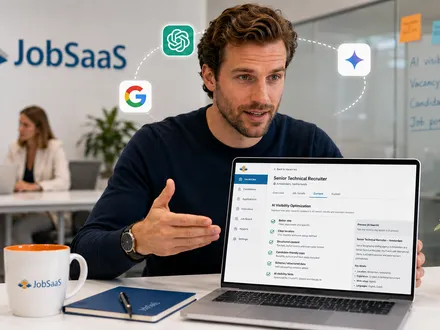
Two JobSaaS specialists working on the development of a professional recruitment agency website. The image shows how JobSaaS helps recruitment agencies with a modern vacancy website for candidates, jobs and online applications.

One job site CMS behind boards, portals and listings

Run a job board, a job site or an industry portal, and the same content model applies. A job portal CMS and a job listing CMS are not separate products here, only different front ends on one system.

That suits recruiters, staffing agencies and publishers running several job markets. You can manage everything yourself in the software, or have JobSaaS set up the complete site and then train your team, which keeps launch effort predictable.

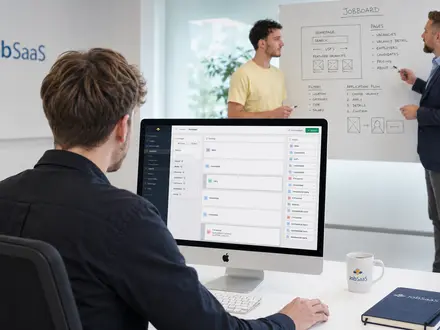
JobSaaS specialists managing a vacancy page on a website for recruitment agencies. The image reflects the use of JobSaaS for regional agencies, sector-focused agencies and recruitment agencies with fast-changing vacancies.

Create and publish job pages from one recruitment CMS

Create and publish everything visitors see: the homepage, employer pages, vacancy pages and the landing pages behind your categories. You organise the structure to match your job market and publish updates the moment content is ready.

With user management you give editors, recruiters and account managers their own access levels, so several people maintain content at once. Editorial work spreads across your team, which keeps a busy site current without routing every change through one person.

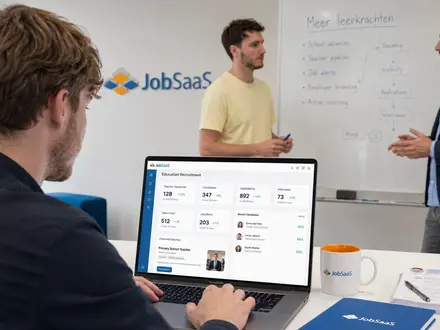
An employee optimises a recruitment agency job site with job site builder while two JobSaaS colleagues discuss in the background. The image reflects managing and improving your own recruitment agency website.

Run a working job platform, not just a page editor

Behind the content sits a real job platform. Vacancy management keeps your listings accurate as roles open and close, and application management collects and tracks candidates so employers act on applications instead of chasing email threads.

As you grow, imports and integrations pull vacancies from other systems, so more employers and roles do not mean more manual work. Delivered as a SaaS job board CMS, the platform keeps improving while your content operation scales.

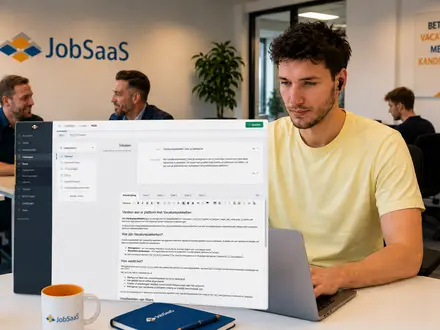
An employee works on a recruitment agency website with job site builder while two colleagues talk. Examples of recruitment agency websites hang on the wall. The image reflects building recruitment agency websites.

SEO-ready pages your job board CMS builds from filters

Candidates rarely search for jobs in general. They look for a specific role in a specific place, and a single search box cannot turn every one of those combinations into a page a search engine can index. You decide which filters fit your market, whether that is role, location, industry, contract type and experience level.

From the filters you configure, JobSaaS can automatically create SEO pages and clean URLs for the combinations that matter, giving each relevant role-and-location page its own indexable entry point. The AI content engine helps here too, generating page introductions and translating content for multilingual job sites, so search engines and AI tools can read structured pages instead of thin ones.

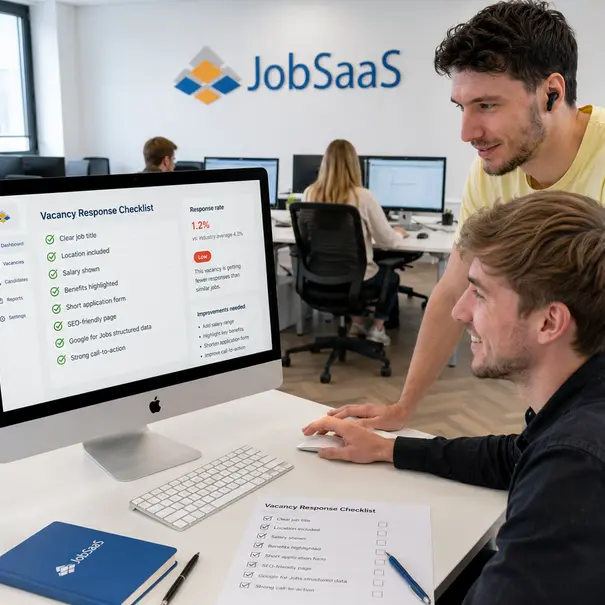
A JobSaaS specialist reviews the job site builder dashboard with a client's vacancies. Colleagues are working in the office in the background. The image reflects managing vacancies within a recruitment agency website.

Job board CMS software built on years of recruitment work

JobSaaS is not a first attempt. Vcreations has been building custom job boards, recruitment websites and platforms since 2007, and that experience was bundled into JobSaaS in 2025. So the content model you edit today reflects what job websites have actually needed for years, not a generic template adapted after the fact.

Because many features were first built as custom requests, capabilities that once needed bespoke development now ship as standard. That lowers your risk: instead of commissioning and maintaining one-off work, you get proven functionality out of the box and can focus on content and growth.

#replace title#