Many staffing agencies feel pressure to increase job advertising budgets when candidate flow slows down. But more spending is not always the best answer. In many cases, agencies already have enough vacancies, content and market relevance to attract more candidates. The missing piece is a stronger candidate acquisition strategy built around owned channels, organic visibility and better conversion.
For staffing agencies, recruitment agencies and temp agencies, job ads have become more expensive, more competitive and less predictable. Paid job boards such as Indeed, LinkedIn and niche platforms can still play an important role, but relying on them too heavily creates a structural problem: every candidate visit must be rented again and again.
A more sustainable approach is to turn your existing vacancies into a long-term recruitment asset. That means making your own vacancy website or job board easier to find, easier to navigate and more effective at converting visitors into applicants.
Why candidate acquisition is becoming more expensive
Most staffing agencies operate in a market where speed matters. When a client sends a new vacancy, the agency needs candidates quickly. The default response is often to publish the vacancy on several paid job boards and wait for applications.
That approach can work, but it has limitations:
- Competition is high: Multiple agencies may advertise similar jobs in the same region.
- Click prices can rise: Popular job categories attract more advertisers.
- Candidate attention is fragmented: Jobseekers use Google, job boards, social platforms, employer websites and AI tools.
- Your brand is less visible: Candidates often remember the job board, not the staffing agency.
- You do not build much long-term value: Once the ad budget stops, the traffic usually stops too.
This is why more staffing agencies are looking beyond paid job ads. The goal is not to stop using job boards completely. The goal is to reduce dependency by building an owned candidate acquisition channel alongside them.
Staffing agencies that depend only on paid job boards are renting candidate attention. Agencies that invest in their own vacancy website are building a recruitment asset.
The hidden value inside your existing vacancies
Many recruitment agencies already have valuable content: job titles, locations, industries, contract types, salary ranges, working hours, job descriptions and client sectors. The problem is that this content is often published in a way that does not fully support organic visibility.
For example, a staffing agency may have dozens or hundreds of vacancies, but the website may only offer a basic list of jobs. The search filters may not create indexable landing pages. Job detail pages may have weak titles. Internal links between related vacancies may be missing. Older vacancies may disappear without supporting category pages that continue to rank.
In other words: the agency has the raw material, but not the structure.
Examples of missed organic opportunities
- A page for “logistics jobs in Rotterdam” does not exist, even though the agency has several logistics vacancies in Rotterdam.
- Vacancies are hidden behind search functionality that Google cannot easily crawl.
- Job titles are too generic, such as “Operator” instead of “Machine Operator Food Production in Eindhoven”.
- There are no strong internal links from industry pages to relevant vacancy pages.
- The website sends most candidate traffic to third-party job boards instead of capturing candidates directly.
Fixing these issues can improve candidate acquisition without increasing job advertising spend.
Strategy 1: Build SEO landing pages around job categories and locations
One of the most effective ways to get more candidates from existing vacancies is to create smart SEO landing pages. These are pages that combine job type, industry, location or employment type in a way that matches how candidates search.
Examples include:
- Warehouse jobs in Utrecht
- Healthcare jobs in Amsterdam
- Temporary logistics jobs in Rotterdam
- Part-time administrative jobs in The Hague
- Technical vacancies in North Brabant
These pages should not be empty filter results. They should provide useful context, such as the types of roles available, common requirements, regions served and links to current vacancies.
For staffing agencies, this is especially powerful because many candidate searches are local and role-specific. A candidate is rarely searching for “staffing agency”. They are more likely to search for “forklift driver job in Utrecht” or “temporary warehouse work near me”.
What a strong SEO vacancy landing page should include
- A clear page title that combines role, sector or location.
- An introduction that explains what kind of vacancies are available.
- Live job listings that match the page topic.
- Internal links to related locations, job types and industries.
- Clear calls to action for applying or registering.
- Content that remains useful even when the number of active vacancies changes.
This is where platforms like JobSaaS can help. A JobSaaS-powered job board can create better vacancy overviews, filter pages and SEO landing pages, helping staffing agencies turn their existing job inventory into a more discoverable recruitment channel.
Strategy 2: Improve job detail pages for both candidates and search engines
A job detail page is often the final step before a candidate decides whether to apply. Yet many vacancy pages are written only from an administrative perspective. They list requirements, tasks and working conditions, but do not make the opportunity easy to understand.
Better job pages can increase applications without increasing traffic. That is important because candidate acquisition is not only about visibility. It is also about conversion.
Elements of a high-converting vacancy page
- Specific job title: Use a title that candidates would actually search for.
- Clear location: Mention the city, region or remote/hybrid option where relevant.
- Salary transparency: Add salary information when possible.
- Simple structure: Use short paragraphs, bullet points and clear headings.
- Practical details: Include working hours, contract type, start date and required experience.
- Low-friction application: Make the application form short and mobile-friendly.
- Related vacancies: Link to similar jobs to keep candidates on your site.
Many candidates compare several vacancies before applying. If your vacancy page is vague, slow or difficult to use on mobile, they may leave even if the job is relevant.
Strategy 3: Use internal linking to keep candidates engaged
Internal linking is often underestimated in recruitment marketing. A candidate who lands on one vacancy may not be ready to apply for that exact role, but they may still be interested in a similar job.
Instead of letting that visitor leave, staffing agencies should guide them to related opportunities.
Useful internal links include:
- Links from a vacancy to similar vacancies in the same region.
- Links from a job detail page to the relevant category page.
- Links from a location page to nearby city pages.
- Links from blog articles to relevant vacancy overviews.
- Links from expired vacancies to active alternatives.
Internal links help candidates navigate your job board, and they also help search engines understand the structure of your website. For a recruitment agency with many vacancies, this can make a significant difference over time.
Instead of sending all traffic to third-party platforms, JobSaaS helps agencies build their own recruitment asset with structured vacancy pages, relevant overviews and internal links between related job pages.
Strategy 4: Create content around candidate questions
Vacancies are important, but they are not the only type of content candidates search for. Many jobseekers have questions before they apply. Staffing agencies can attract more organic candidate traffic by answering those questions on their own website.
Examples of candidate-focused content include:
- How to prepare for a warehouse job interview.
- What to expect when working through a temp agency.
- How weekly payment works for temporary jobs.
- Which certificates are useful for logistics jobs.
- How to switch from hospitality to office support.
- What candidates should know about working night shifts.
This type of content supports SEO, but it also builds trust. Candidates who receive useful guidance from your agency are more likely to view your brand as helpful and professional.
How to connect content with vacancies
Candidate content should not sit separately from your job board. It should support the application journey. For example, an article about forklift certificates should link to current forklift driver vacancies. A guide about working in healthcare should link to healthcare jobs and registration options.
This creates a stronger candidate journey:
- The candidate searches for practical information.
- They find a useful article on your website.
- The article links to relevant vacancies.
- The candidate explores jobs and applies or registers.
This approach can generate candidate traffic before someone is actively comparing job ads on paid job boards.
Strategy 5: Make your vacancy website ready for AI search visibility
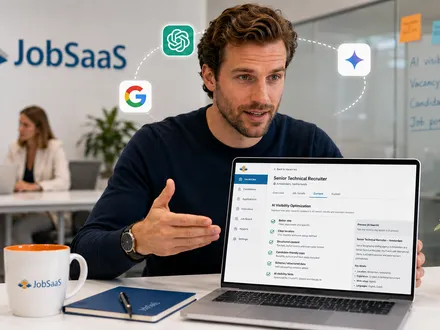
Candidate search behavior is changing. People still use Google, but they also ask questions in AI platforms such as ChatGPT, Claude and Google AI Overviews. These systems tend to favor clear, structured, useful information that can be understood and summarized.
For staffing agencies, this means vacancy websites should be built in a way that makes content easy to interpret. AI visibility is not about tricks. It is about clarity, structure and authority.
How staffing agencies can improve AI search visibility
- Use clear page titles and headings.
- Explain what types of jobs you offer in plain language.
- Create helpful pages around industries, roles and locations.
- Answer common candidate questions directly.
- Keep vacancy information accurate and up to date.
- Use structured pages instead of hiding everything inside search filters.
- Build topical authority around the sectors you serve.
For example, an agency specializing in logistics staffing should not only publish individual logistics vacancies. It should also have strong pages about logistics jobs, warehouse work, forklift roles, night shifts, regional logistics hubs and candidate requirements.
A JobSaaS-powered job board gives staffing agencies more control over their candidate acquisition strategy by supporting SEO-friendly structures, smart vacancy overviews and content that can be understood by both search engines and AI platforms.
Strategy 6: Reduce friction in the application process
More traffic is valuable only if candidates actually apply. Many staffing agencies lose candidates at the application stage because the process is too long, unclear or not mobile-friendly.
This is especially important for temp agencies and employment agencies, where candidates may apply quickly between shifts, during travel or from a mobile phone.
Common conversion problems
- The application form asks for too much information too early.
- Candidates must create an account before expressing interest.
- The website is difficult to use on mobile.
- The apply button is not visible enough.
- The vacancy page does not clearly explain next steps.
- There is no option to register for future jobs.
Improving conversion can produce more candidates from the same number of visitors. That means staffing agencies can increase results without increasing ad spend.
Practical improvements include shorter forms, clearer calls to action, mobile-first layouts, vacancy alerts and registration options for candidates who are interested but not ready to apply immediately.
Strategy 7: Build a candidate database from organic traffic
Not every visitor will apply for a vacancy immediately. Some candidates are exploring options. Others may not find the right job today but could be relevant next week.
This is why staffing agencies should not treat vacancy pages as one-time application pages only. They should also use them to grow a candidate database.
Examples of useful candidate capture options include:
- Job alerts based on location, sector or job type.
- Open registration forms for future opportunities.
- Talent pools for specific industries.
- Newsletter signups with relevant job updates.
- Simple “send me similar jobs” options.
This turns website visitors into reusable candidate relationships. Over time, the agency becomes less dependent on paying again for the same type of candidate traffic.
Research-backed perspective
Guidance from Google Search Central emphasizes the importance of crawlable, well-structured pages for organic visibility. For staffing agencies, this means job listings should not only exist as database records, but also as indexable pages with clear titles, internal links and relevant supporting content.
Research and reports from LinkedIn Talent Solutions often highlight that candidates interact with employers and recruitment brands across multiple touchpoints before applying. This supports the idea that staffing agencies should not rely on one channel only, but should build a broader recruitment marketing presence.
Insights from Indeed Hiring Lab and labor market research more broadly show that candidate behavior is influenced by job quality, clarity, salary information, location and ease of application. For recruitment agencies, this reinforces the need to make vacancy pages specific, transparent and easy to act on.
Studies in user experience and conversion optimization also show that friction in digital forms can reduce completion rates. In recruitment, that means long forms, unclear steps and poor mobile usability can directly reduce candidate applications.
How JobSaaS supports a stronger candidate acquisition strategy
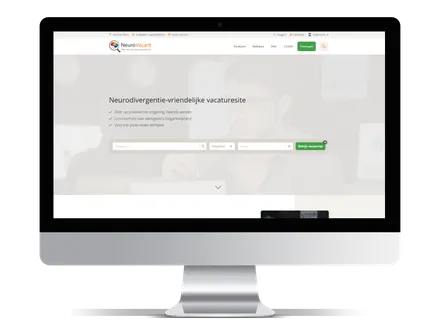
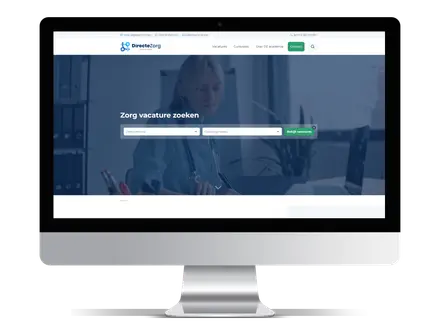
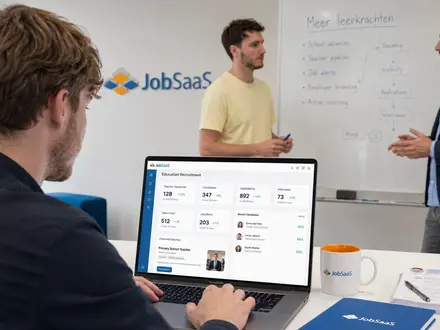
JobSaaS is designed for staffing agencies, recruitment agencies, jobboard owners and employment organizations that want more control over their online recruitment presence. Instead of relying only on third-party job boards, agencies can use JobSaaS to build and manage their own professional vacancy website or job board.
Relevant capabilities include:
- SEO-friendly vacancy pages that can be indexed by search engines.
- Smart filter pages and landing pages for roles, sectors and locations.
- Clear vacancy overviews that improve candidate navigation.
- Internal links between related vacancy pages.
- Support for multilingual vacancy websites.
- Fast publication of new jobs.
- Better control over brand, data and the candidate journey.
- Conversion-focused application flows.
- A scalable foundation that can later expand toward ATS functionality.
This does not mean staffing agencies should never use paid job boards. Paid channels can still be useful for speed, reach and competitive vacancies. But agencies should avoid building their entire candidate acquisition strategy on rented traffic.
A stronger model combines paid job advertising with an owned vacancy website that grows in value over time.
Practical action plan for staffing agencies
Staffing agencies that want more candidates without spending more on job ads can start with the following steps:
- Audit your current vacancy website: Check whether job pages are indexable, specific and easy to use.
- Identify search opportunities: Look at combinations of job titles, sectors and locations.
- Create SEO landing pages: Build pages for important job categories and regions.
- Improve vacancy content: Make job descriptions clearer, more specific and more candidate-focused.
- Add internal links: Connect vacancies, categories, locations and blog articles.
- Reduce application friction: Shorten forms and optimize the mobile experience.
- Capture candidates earlier: Add job alerts, open registrations and talent pools.
- Measure results: Track organic traffic, applications, conversion rates and candidate sources.
The most important mindset shift is simple: every vacancy should do more than fill one role. It should also contribute to the long-term visibility and authority of your recruitment brand.
Conclusion
Staffing agencies do not always need to spend more on job ads to get more candidates. Often, the bigger opportunity is to make better use of the vacancies, content and market knowledge they already have.
By investing in SEO-friendly vacancy pages, smart landing pages, internal linking, candidate-focused content, AI search visibility and better conversion, agencies can build a more sustainable candidate acquisition strategy.
Paid job boards may remain part of the mix, but they should not be the only source of candidate flow. Agencies that build their own recruitment asset gain more control over visibility, data, brand experience and long-term growth.
For staffing agencies that want more control over candidate acquisition, JobSaaS offers a practical way to build and manage a recruitment website that supports SEO, AI visibility and conversion without starting from scratch.